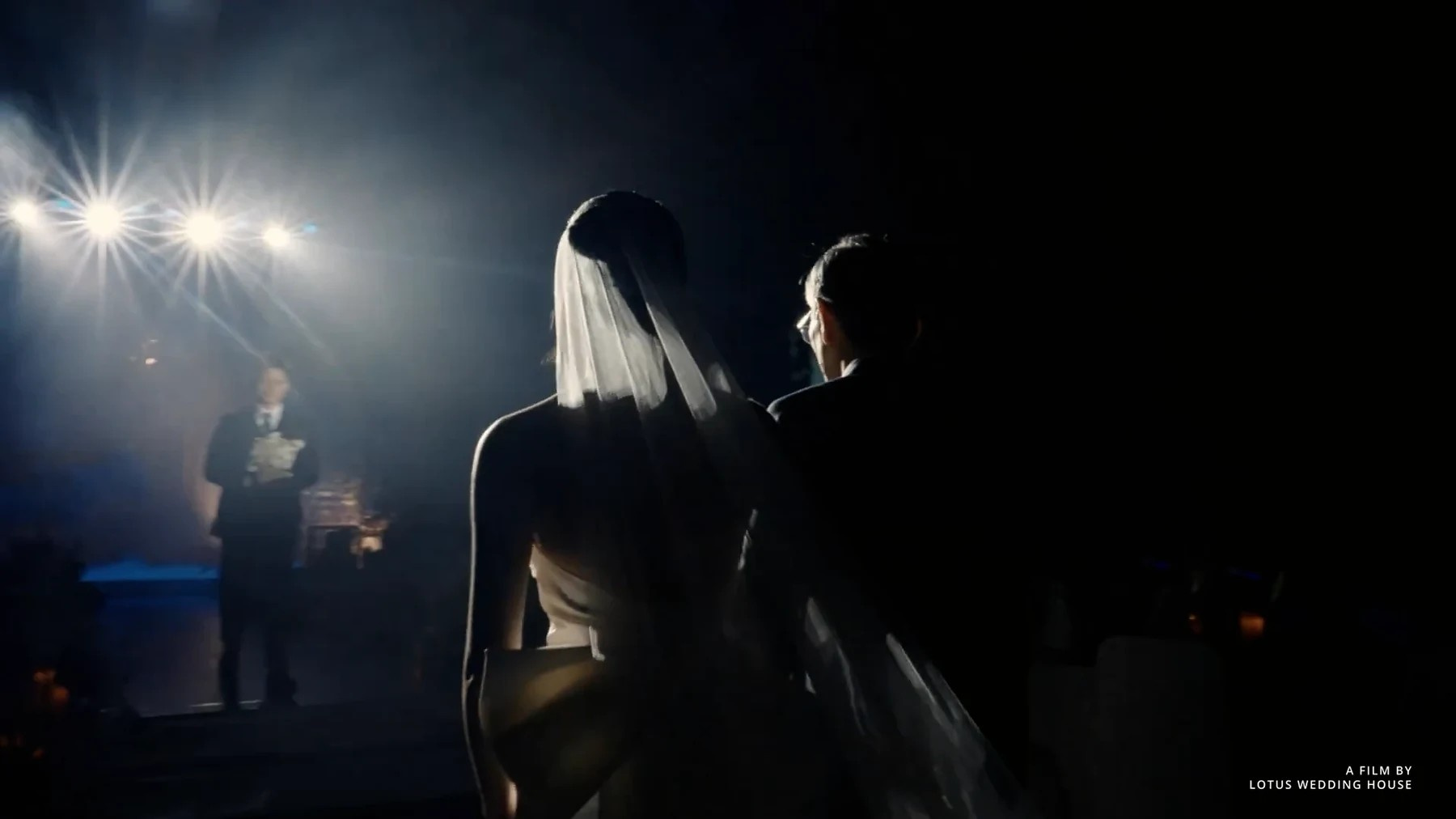
Rock and a luxury wedding are not opposites. The tension appears only when the music is treated as a genre label instead of a design choice. Used with control, a guitar-driven moment can create one of the most personal shifts of the evening—especially when it reflects the couple more truthfully than a conventional wedding playlist would.
Rock works when it belongs to the couple
A wedding does not become less elegant because the couple loves rock. Elegance comes from coherence: the music, venue, programme and personalities feel considered together. If a song is genuinely part of the couple's story, removing it simply because it is not traditionally “wedding” can make the celebration more generic, not more refined.
The useful question is where that energy belongs. A distorted-guitar entrance may be wrong for a quiet ceremony but perfect after dinner. A rock ballad can work beautifully for a personal dedication. A familiar anthem can transform a late set when guests are ready to participate.
For the wider planning context, explore How a Song Is Prepared Before It's Performed at Your Wedding.
Arrangement matters more than genre
Rock covers a wide spectrum, from intimate acoustic writing to dense drums and electric guitars. The wedding arrangement decides where on that spectrum the performance should sit.
A tasteful version can begin with piano or clean guitar, preserve the vocal lyric and delay the full rhythm section until the emotional point of the song. Conversely, an after-party arrangement may need the opposite: a decisive opening, stronger drums and a guitar tone that immediately changes the room.
The goal is not to make rock polite. It is to control scale, timing and texture so the character of the music remains intact without overwhelming the event.
Choose the right moment for the change in energy
Rock is often most effective when it provides contrast. After a dinner dominated by softer material, the first unmistakable guitar riff can signal that the evening is entering a new phase. Guests understand the shift before anyone announces it.
That contrast loses power if the band uses the same intensity too early. Holding back creates anticipation. It also protects speeches, dinner conversation and the emotional register of the ceremony from unnecessary volume.
For weddings that move from formal reception to after-party, rock can become one of the clearest musical bridges between those two identities.
A luxury sound is controlled, not timid
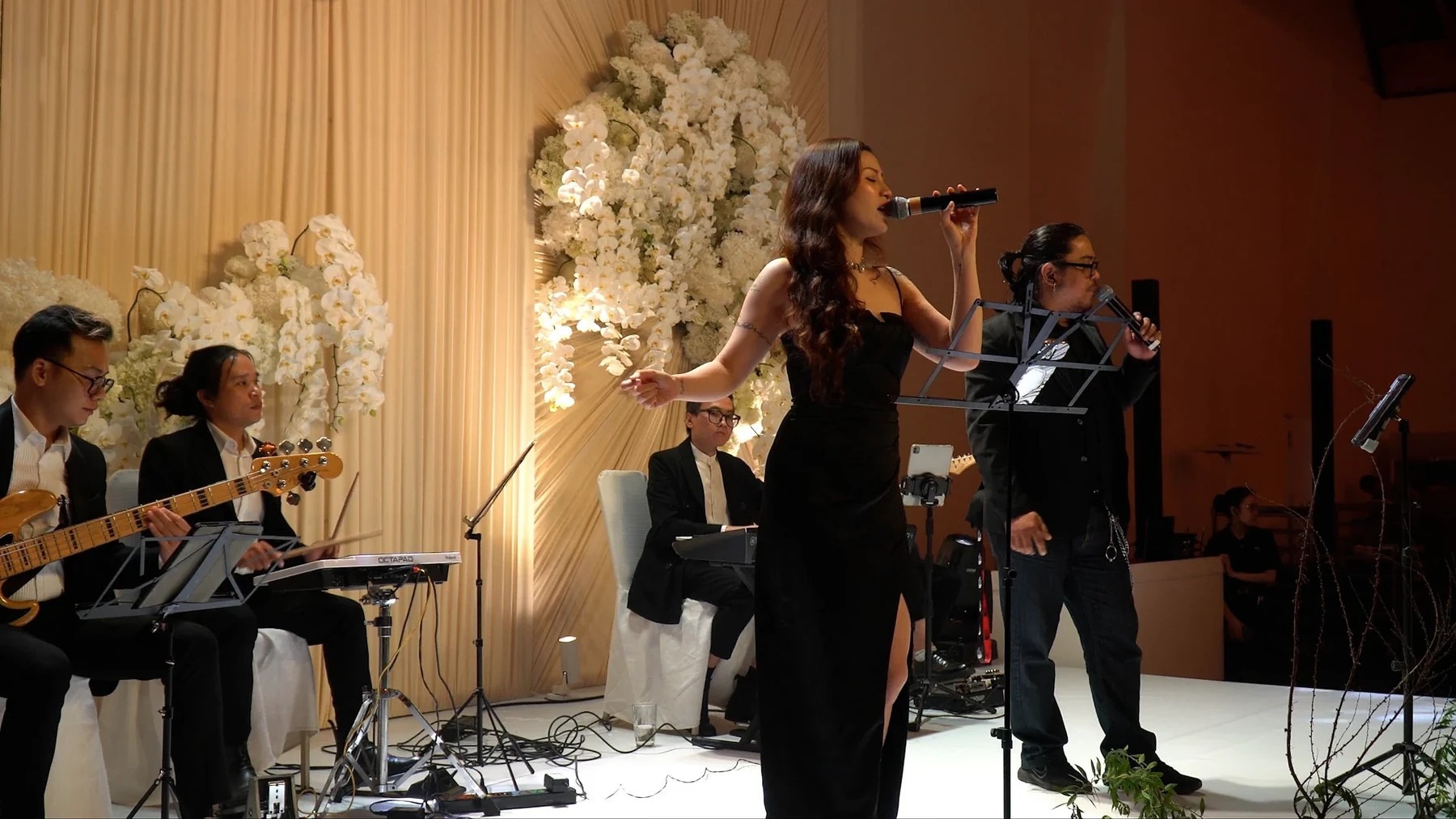
High-end event sound is sometimes mistaken for low volume at all times. In practice, refinement is about control: vocals remain clear, instruments occupy defined space, low frequencies do not swallow the room, and the system can become powerful without becoming harsh.
Rock exposes weak sound decisions quickly. Drums, guitar and bass can accumulate energy in the same frequency range, especially in reflective ballrooms. The arrangement and sound mix therefore need to work together. Fewer simultaneous layers can often make the band feel larger because each part is more intelligible.
A useful next step is understanding Ceremony Music: Why the First Song Sets the Tone.
A real request can be more valuable than a trend
Lux Band has received real wedding requests for rock repertoire. The useful lesson is not that every wedding should add a rock set. It is that couples increasingly expect the music to reflect their own listening history rather than a fixed catalogue of “appropriate” wedding songs.
In one anonymised coastal wedding brief, the rock direction was retained as a personal part of the celebration rather than presented as a themed wedding. That distinction matters: the genre supported the couple's identity without becoming the visual or narrative concept of the entire event.
The example remains anonymous to protect client privacy, and no unverified venue or couple details are attached to it.
How to brief a rock moment without losing the wedding
Start with two or three songs that genuinely matter, not a large genre wishlist. Explain whether you want the original intensity or a reinterpretation. Identify the moment—dinner, couple entrance, guest performance or late celebration—and the kind of guest reaction you hope to create.
Then let the music director build the surrounding set so the rock material has context. A strong transition into the songs and an intentional transition out can make the moment feel integrated rather than inserted.
The result should sound unmistakably like the couple, while the evening still feels like one designed experience.
This also connects closely with Can a Wedding Band Learn Your First-Dance Song? What Makes a Song Work Live.
Questions couples often ask
Is rock too loud for a luxury wedding?
It does not have to be. Arrangement, amplification, room acoustics and timing determine whether the sound feels powerful or uncontrolled.
Can rock work during dinner?
Softer rock, acoustic reinterpretations and ballads can work during dinner. Heavier material is usually more effective later in the evening.
Do we need an electric guitar in the lineup?
Not always, but an electric guitar can be important if the tone and identity of the original repertoire depend on it.
Can the band mix rock with pop or R&B?
Yes. A mixed set often works better than treating rock as an isolated theme, provided the transitions are arranged intentionally.
Should we choose songs for guests or for ourselves?
Both matter. Start with music that is authentic to the couple, then shape the sequence so guests can enter the experience naturally.
Written and reviewed by Lux Band Editorial Team
·
“Rock does not break a luxury wedding. Uncontrolled choices do. Personality, arranged with restraint, can make the evening more elegant because it is more truthful.”
Design one unexpected moment that still feels like you
Share the songs you would never want removed from your story. Lux Band can explore how to place and arrange them without losing the elegance of the wider celebration.
Start a conversation →