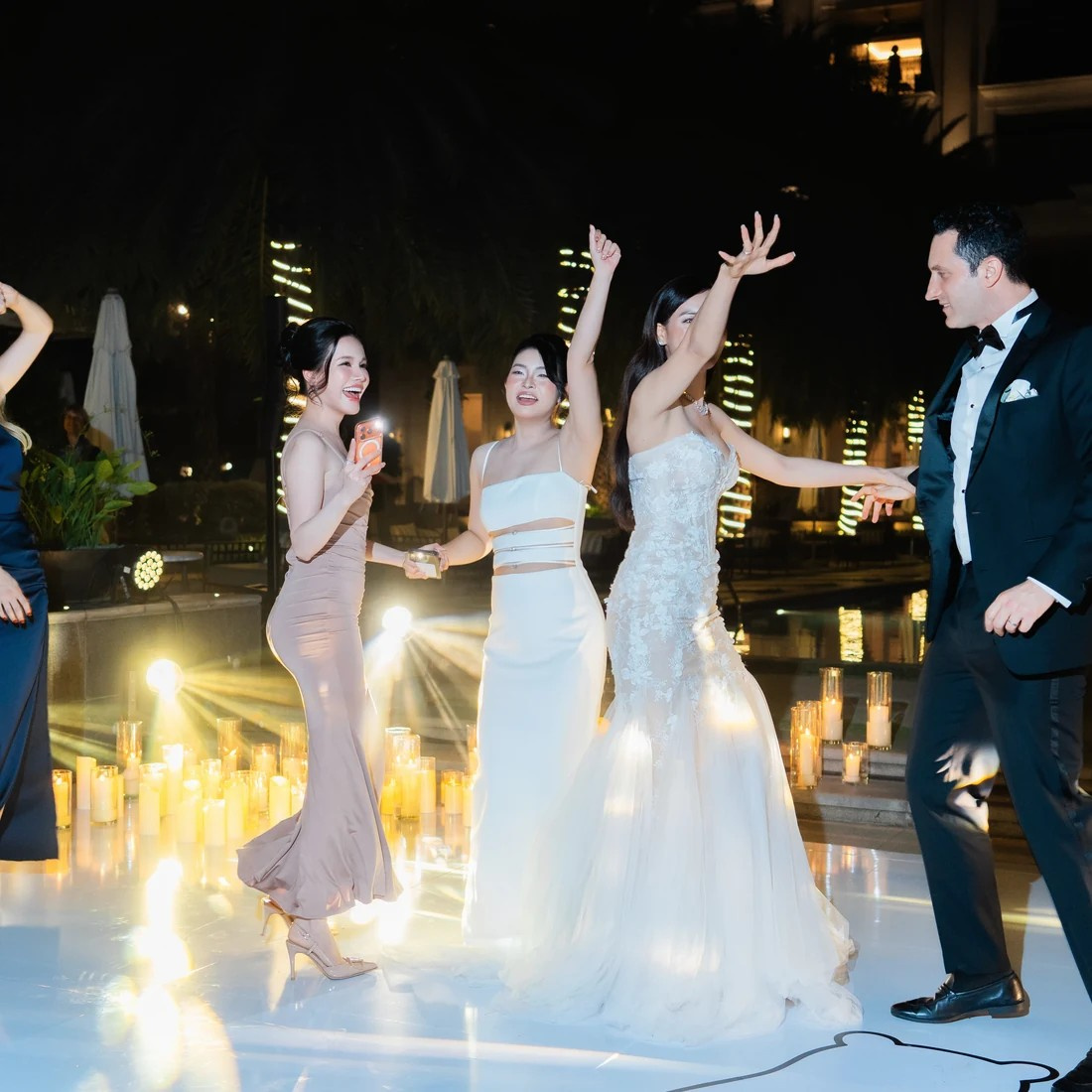
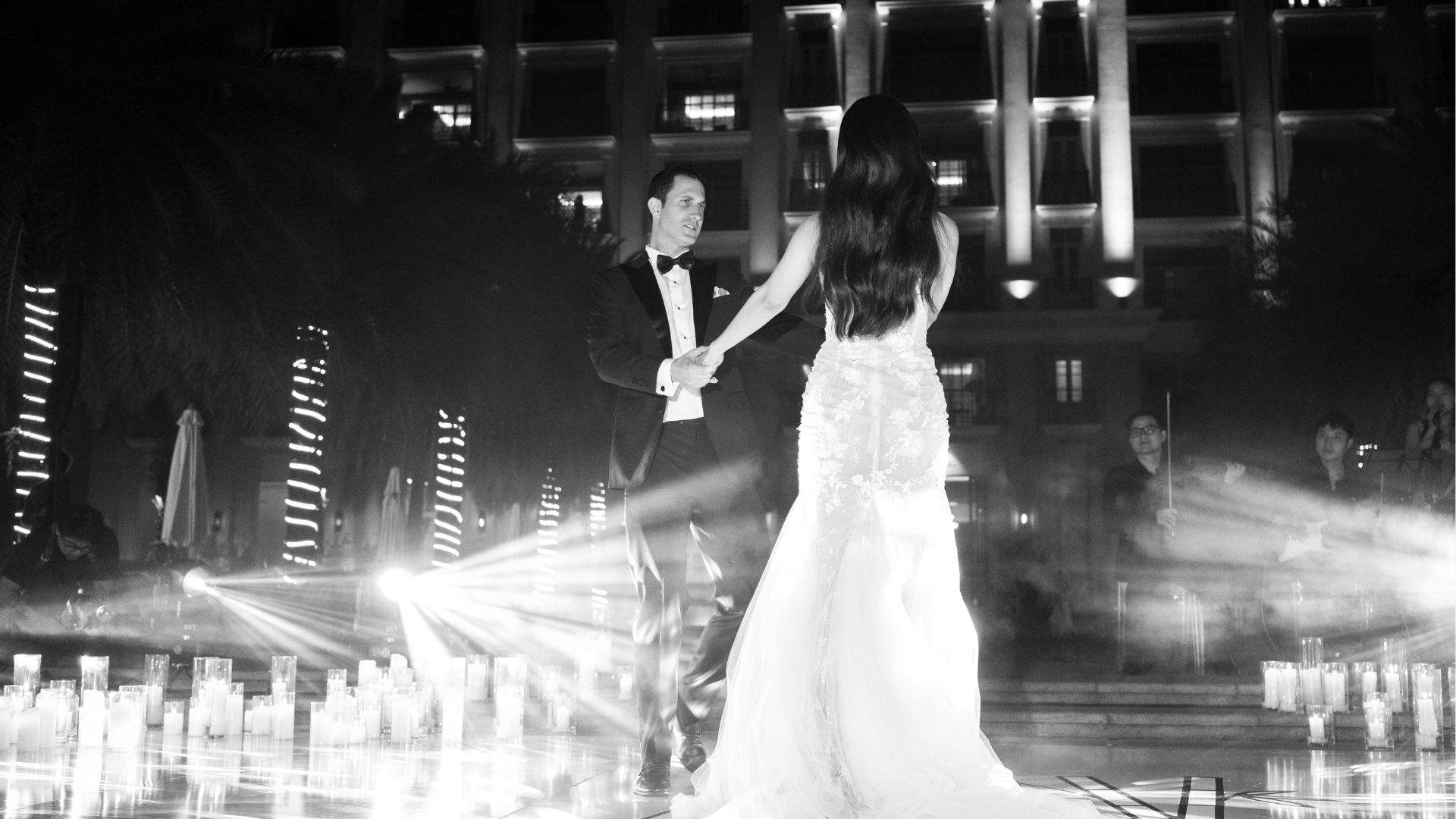
The more moving parts a wedding has, the more important musical restraint becomes. Speeches, family moments, games, videos, cultural rituals and guest performances can make the celebration richer—but only when the music knows when to lead, when to support and when to disappear completely.
Start with the programme before building the setlist
A multi-segment wedding should not be planned as a normal band performance interrupted by other activities. The programme itself is the structure, and the music should be arranged around it. That means identifying fixed moments first: ceremony cues, speeches, presentations, games, videos, couple entrances, formal dances and any cultural elements that cannot move.
Once those anchors are visible, the live sets can be placed where they improve continuity rather than compete for attention. A five-song set may be perfect in one part of the evening and too long in another. The question is not how much the band can play; it is where music creates the most value.
For the wider planning context, explore How a Song Is Prepared Before It's Performed at Your Wedding.
Not every transition needs a song
Silence is one of the most underused tools in event music. After an emotional family speech, immediately starting an upbeat song can flatten the feeling before guests have time to absorb it. After a game, however, a quick musical pickup can prevent the room from dropping in energy.
The band and MC should therefore distinguish between transitions that need momentum and transitions that need space. Short instrumental cues, a single chorus, ambient underscoring or no music at all can each be the right choice depending on the preceding moment.
Luxury is often felt in this restraint. The programme feels composed instead of continuously filled.
Group moments by emotional weight
A useful approach is to avoid placing too many high-attention moments back to back. Parent speeches, a couple thank-you, a surprise performance and a highlight video may all be meaningful, but when concentrated into one long block they can create emotional fatigue.
Music can act as a reset between these moments. A warm dinner set can reopen conversation after formal speeches. A familiar sing-along can reconnect the room after a video. A short instrumental bridge can move attention toward the stage without requiring another announcement.
The objective is not constant excitement. It is rhythm: focus, release, conversation, lift and celebration.
Coordinate cues with the MC and planner
The MC controls verbal attention, the planner controls the event timeline, and the band controls musical attention. When those roles operate independently, guests feel the seams: overlapping announcements, songs cut unexpectedly, awkward waiting or performers entering before the room is ready.
Before the event, the team should agree on who gives each cue and what happens when the programme runs early or late. The band needs to know which segments are fixed, which can move, and which songs are safe to extend or shorten.
A simple shared running order with clear decision authority is often more valuable than an over-detailed minute-by-minute script that nobody can adapt.
A useful next step is understanding Before the First Song: What a Professional Wedding Soundcheck Actually Covers.
Protect the energy curve
Many weddings unintentionally spend their strongest musical energy too early. If the room reaches peak volume before dinner is complete, later speeches and family moments can feel like interruptions rather than highlights.
A better energy curve keeps headroom. Early live music can be elegant and socially comfortable; the band can gradually increase rhythmic density, vocal interaction and tempo as formal obligations finish. By the time the programme opens into celebration, the music has somewhere to go.
This is especially important when the same band covers several parts of the evening. Consistency of musicians does not mean consistency of intensity.
Design a flexible version of the timeline
Real weddings move. A speech may be shorter, dinner service may take longer, a surprise may be added, or guests may remain on the dance floor when the schedule says the next segment should begin. The music plan should anticipate these possibilities rather than treating them as failures.
For each live set, identify an ideal length and a shorter or longer version. Decide which songs are essential and which can be removed without damaging the arc. Agree on a small number of signals between planner, MC and bandleader.
When flexibility is designed in advance, the event can change without feeling disorganised. The guests experience one flowing evening even though the team is making decisions continuously behind the scenes.
This also connects closely with How Lux Band Works With International Wedding Planners and Venues.
Questions couples often ask
Should the band play underneath speeches?
Usually not unless subtle underscoring has been specifically designed. Clear speech intelligibility should take priority.
How many live sets should a complex programme include?
There is no universal number. The programme, dinner service and desired energy curve should determine the set structure.
Who should cue the band?
The cue path should be agreed in advance, usually through the planner or MC to one bandleader rather than several people giving instructions.
What if the wedding runs late?
The team should know which music can be shortened, moved or removed while protecting the most important moments.
Can music help a long programme feel shorter?
Yes. Well-placed musical resets can restore attention and energy, but continuous music can have the opposite effect.
Written and reviewed by Lux Band Editorial Team
·
“When a wedding has many moments, good music direction is partly the art of knowing what not to play.”
Turn a complicated programme into one coherent evening
Share the running order, speeches, special performances and key moments. Lux Band can shape the music around the programme instead of forcing the programme around the band.
Start a conversation →