The Acoustics of Volume: Resolving the Reverb Challenge
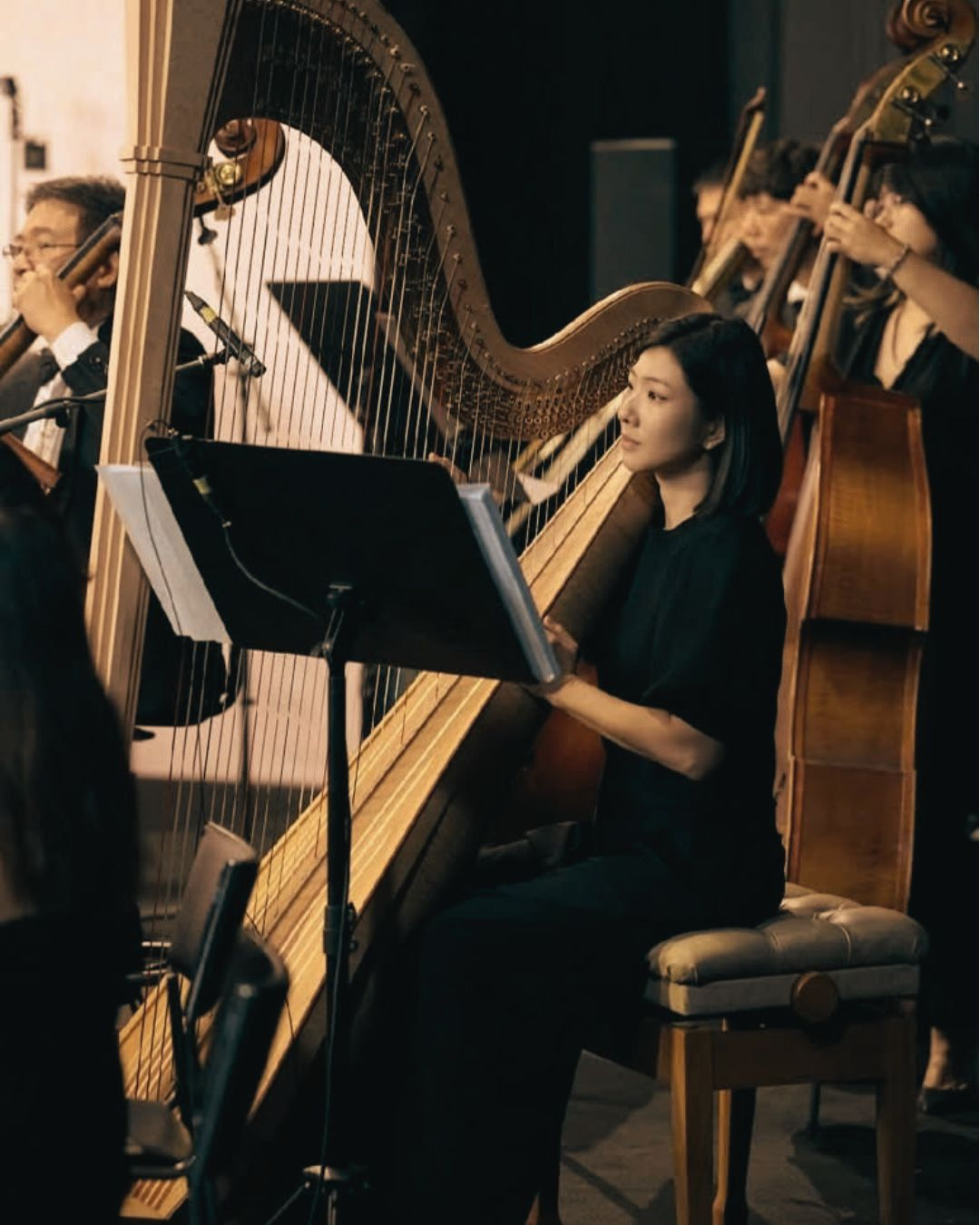
The primary challenge of any high-ceilinged venue is managing sound reflections. Sound waves generated by acoustic instruments—such as the intricate highs of a violin or the natural resonance of a grand piano—can bounce off expansive vertical surfaces, creating room reverberation.
If left unmanaged, distinct musical notes begin to bleed together, reducing vocal clarity and weakening the emotional impact of moments such as the couple's entrance or the exchange of vows.
To preserve clarity, the production plan can use suitable direct-injection boxes, pickups or microphones to capture instruments cleanly at the source. The exact method depends on the lineup, and it should be tested before amplification into the ballroom.
Precision Sound Distribution: The Architecture of Zone Audio
In a large ballroom, simply increasing volume from the main stage is not an acceptable solution. It can create uncomfortable levels near the stage while still failing to provide clarity at the back of the room.
For a complementary planning perspective, explore Five Ho Chi Minh City Wedding Venues Through the Lens of Live Music.
A zoned approach can combine carefully placed supporting speakers with timing adjustments based on distance from the stage. When the room and seating plan require them, slim column-array systems can provide even coverage without relying on excessive volume from one position.
Whether guests are seated near the string ensemble or at the far edge of the ballroom, the goal is the same: pristine, comfortable sound without forcing the entire room to listen at excessive volume.
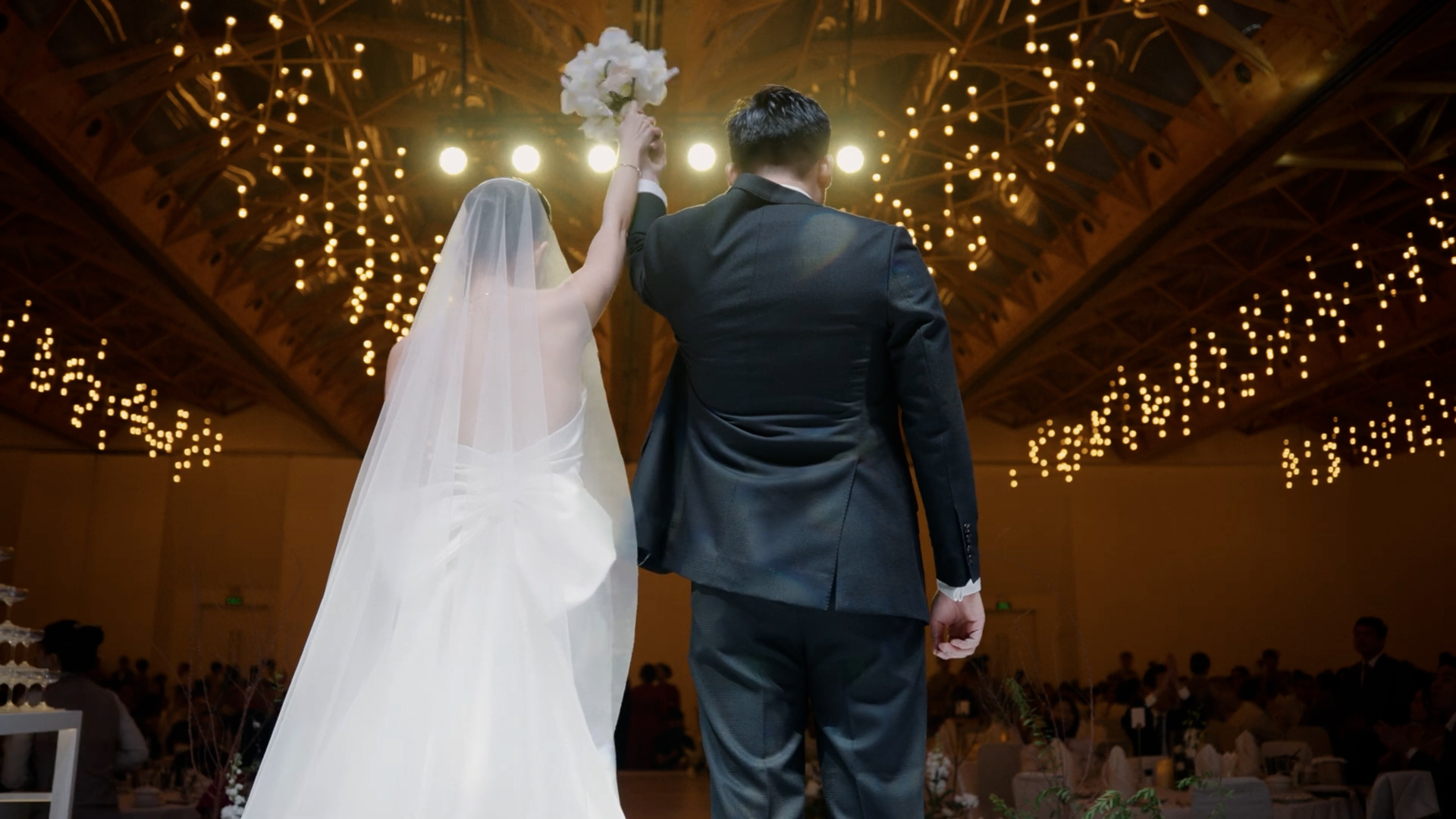
Seamless Aesthetic Integration: The Invisible Setup
A premium wedding aesthetic requires every technical element to respect the visual design curated by the wedding planner. Bulky speaker cabinets, heavy tripods and exposed cable runs can quickly disrupt floral installations and couture tablescapes.
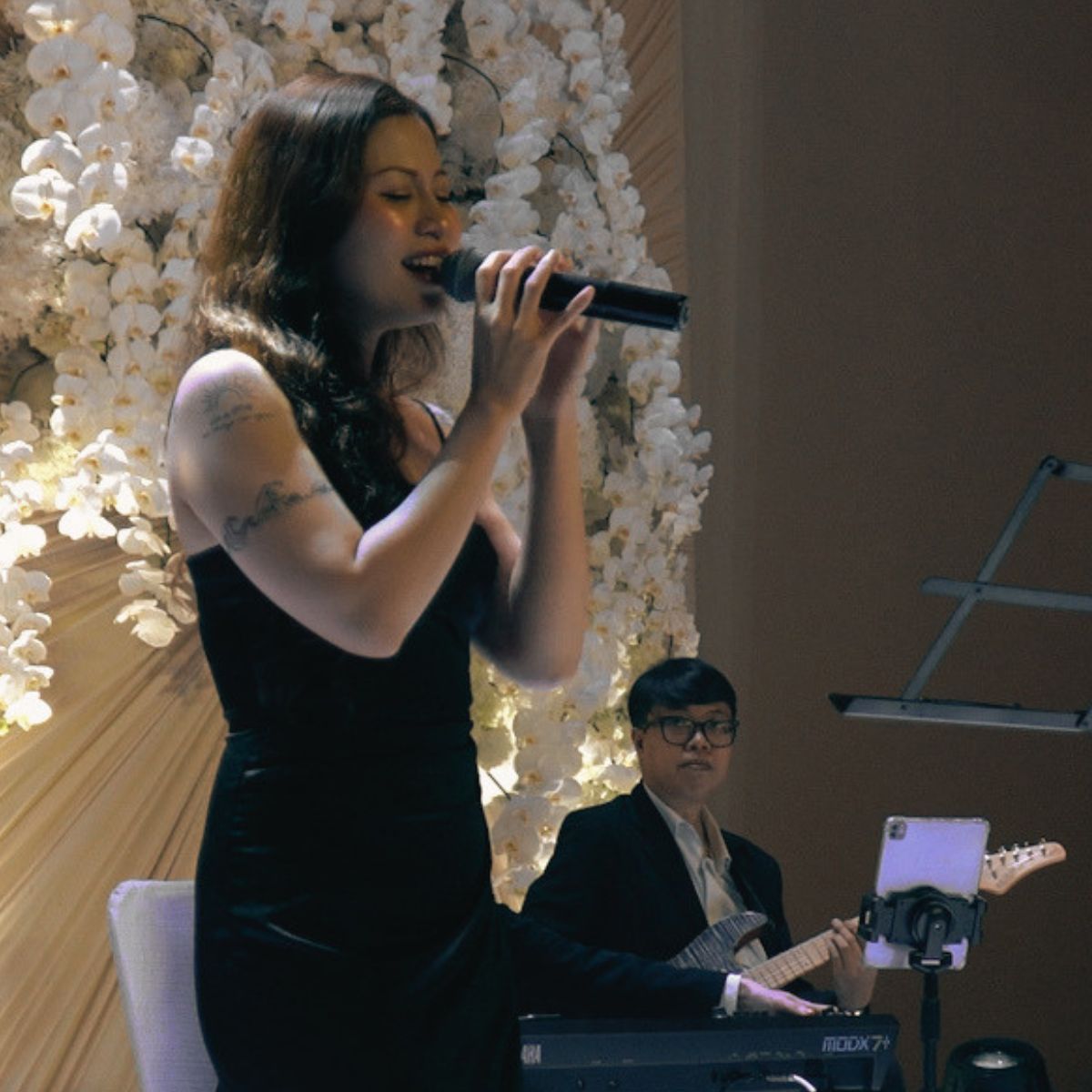
Depending on the room, floor plan and production scope, Lux Band may use a structural-minimalism approach. Slender vertical speaker systems can be aligned with architectural lines, while cable routes may be placed beneath staging or concealed along approved venue paths when the setup allows.
The result is a clean, professional stage in which technology supports the performance without competing for attention.
Designing Around the Wedding Timeline, Not Only the Room
Ballroom acoustics are only one part of the brief. The music plan must also follow the emotional and operational rhythm of the wedding. Guest arrival needs warmth without demanding attention; the entrance needs definition; dinner requires enough detail to feel live while leaving space for conversation; and the final celebration may need a broader dynamic range. Treating every phase as the same sound requirement usually produces an evening that feels either restrained throughout or unnecessarily loud.
A useful next step is understanding White Palace Weddings: Designing Live Sound for a Grand Ballroom.
A useful planning document identifies the musical role, expected guest activity and technical cue for each phase. This allows the band, planner and venue team to agree on when the room should feel intimate, when a vocal announcement must be completely clear and when the performance can become more present. The result is not simply better sound. It is a ballroom that changes character naturally as the celebration progresses.
A Practical Site-Visit Checklist for International Planners
Before confirming the final setup, the production team should review the selected hall, stage orientation, guest count, table plan, entrances, LED screens, ceiling installations and service routes. Speaker positions that work for one configuration may be blocked by floral structures or create uneven coverage after the floor plan changes. Power, cable routes and the location of the control position should therefore be agreed before the final production drawing is locked.
International couples do not need to choose technical equipment themselves. They do, however, benefit from asking whether the band, venue and planner have one coordinated plan. The strongest sign is a shared document that names the cue owner, soundcheck window, backup contact and any restrictions affecting the stage. That preparation protects both the atmosphere and the visual design on the wedding day.
Frequently Asked Questions
How does Lux Band coordinate soundchecks with international wedding planners at GEM Center?
When the event scope requires a dedicated soundcheck, the window can be agreed with the planner and venue production team after the setup schedule is known. The aim is to test vocals, instruments, announcements and key cues without interrupting floral, lighting or guest-arrival preparations.
Will a violin, cello or acoustic ensemble be lost in a large ballroom?
Not when the ensemble is amplified and distributed for the actual seating plan. Instrument pickups or suitable microphones, controlled gain and appropriately placed speakers can preserve warmth and detail without forcing excessive stage volume.
Does a sound engineer remain during the wedding?
For a production that includes live amplification, an on-site sound engineer should manage levels and cues throughout the programmed performance. The exact staffing plan is confirmed in the event proposal.
When should the stage and speaker positions be approved?
They should be reviewed before decor and production drawings are finalized. Early coordination prevents speaker sightlines, cable routes or control positions from conflicting with floral installations, screens and guest circulation.
Can the same setup support ceremony, dinner and after-party music?
It can, provided all phases are designed as one system and tested in advance. The lineup, monitoring, inputs and level strategy may change by phase even when the core technical infrastructure remains in place.
Written and reviewed by Lux Band Editorial Team
·
“A grand ballroom does not need louder sound. It needs every layer of sound placed with precision.”
Let the music become part of the experience.
Every detail—from the lineup to the acoustic footprint—can be designed around the atmosphere you want your guests to remember.
This decision also connects closely with Park Hyatt Saigon: When Live Music Becomes Part of the Architecture.
Begin a conversation about your wedding music
Send an Enquiry →