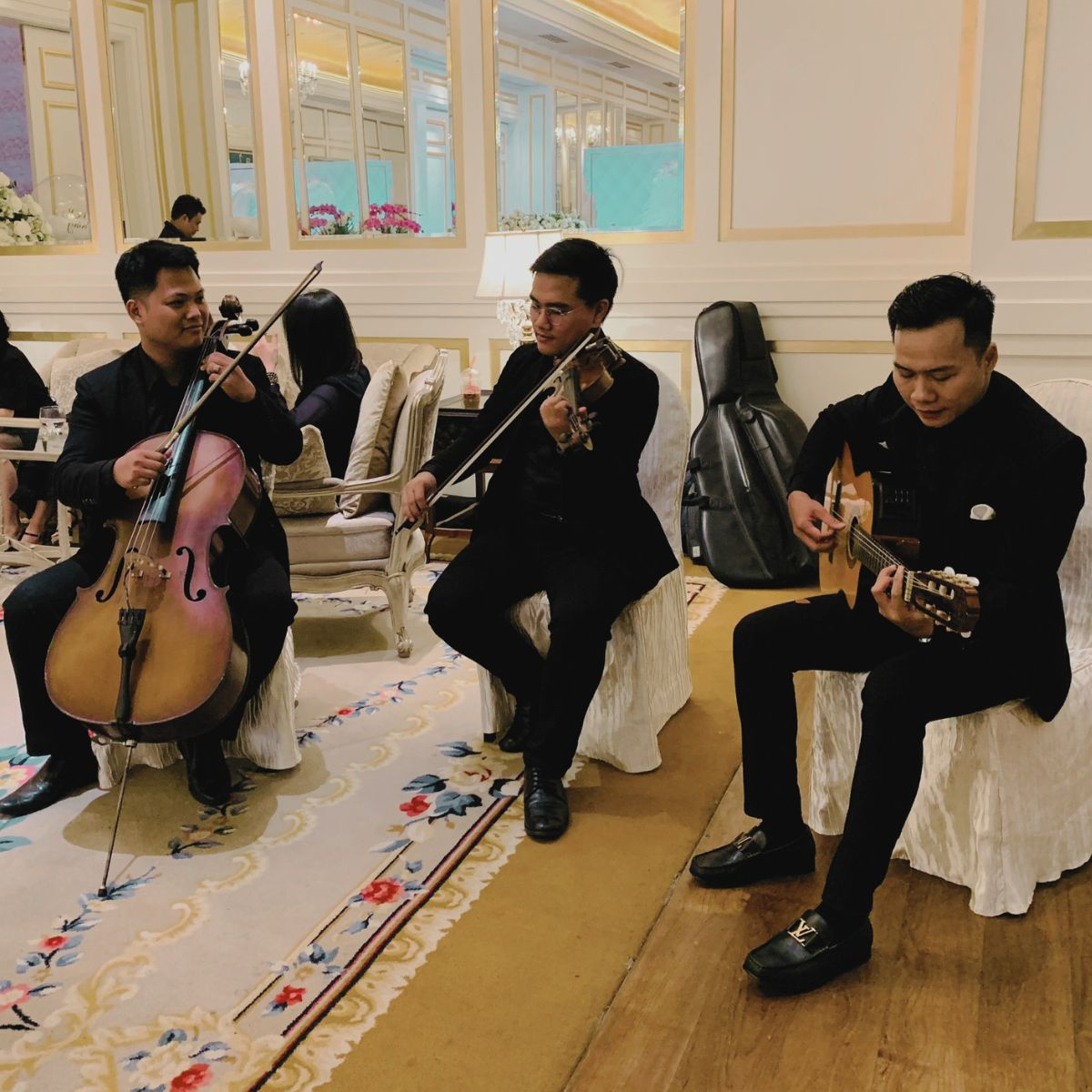
Disco has an unusual advantage at a wedding: it can feel celebratory without requiring the room to become a nightclub immediately. A strong groove, recognisable bass movement and bright vocal energy can bring several generations onto the same dance floor—especially when the band uses disco as a transition from reception to celebration rather than as an all-night theme.
Why disco works across generations
Wedding dance floors are mixed spaces. Guests may differ in age, nationality and musical habits. Disco repertoire often sits in a useful middle ground: rhythmic enough to invite movement, melodic enough to remain familiar, and structurally clear enough for a live band to create immediate participation.
The appeal is not only nostalgia. Contemporary pop still borrows heavily from disco rhythm, bass and production language, so the transition between classic and modern repertoire can feel surprisingly natural.
For international weddings, that shared rhythmic vocabulary can be more effective than relying on one country's current chart hits.
For the wider planning context, explore Rock at a Vietnam Wedding: Why Not?.
Use disco as an energy threshold
The first disco number can function as a signal: formal dinner is ending and the evening is opening. That threshold is more powerful when the earlier music has preserved enough contrast.
Rather than beginning dinner at full rhythmic density, the band can allow groove to arrive gradually. Percussion becomes more active, bass lines become more forward, tempos lift, and vocals move from background elegance toward direct guest interaction.
By the time the disco set begins, the room feels as if it has naturally reached that energy rather than being forced into it.
Live disco depends on the rhythm section
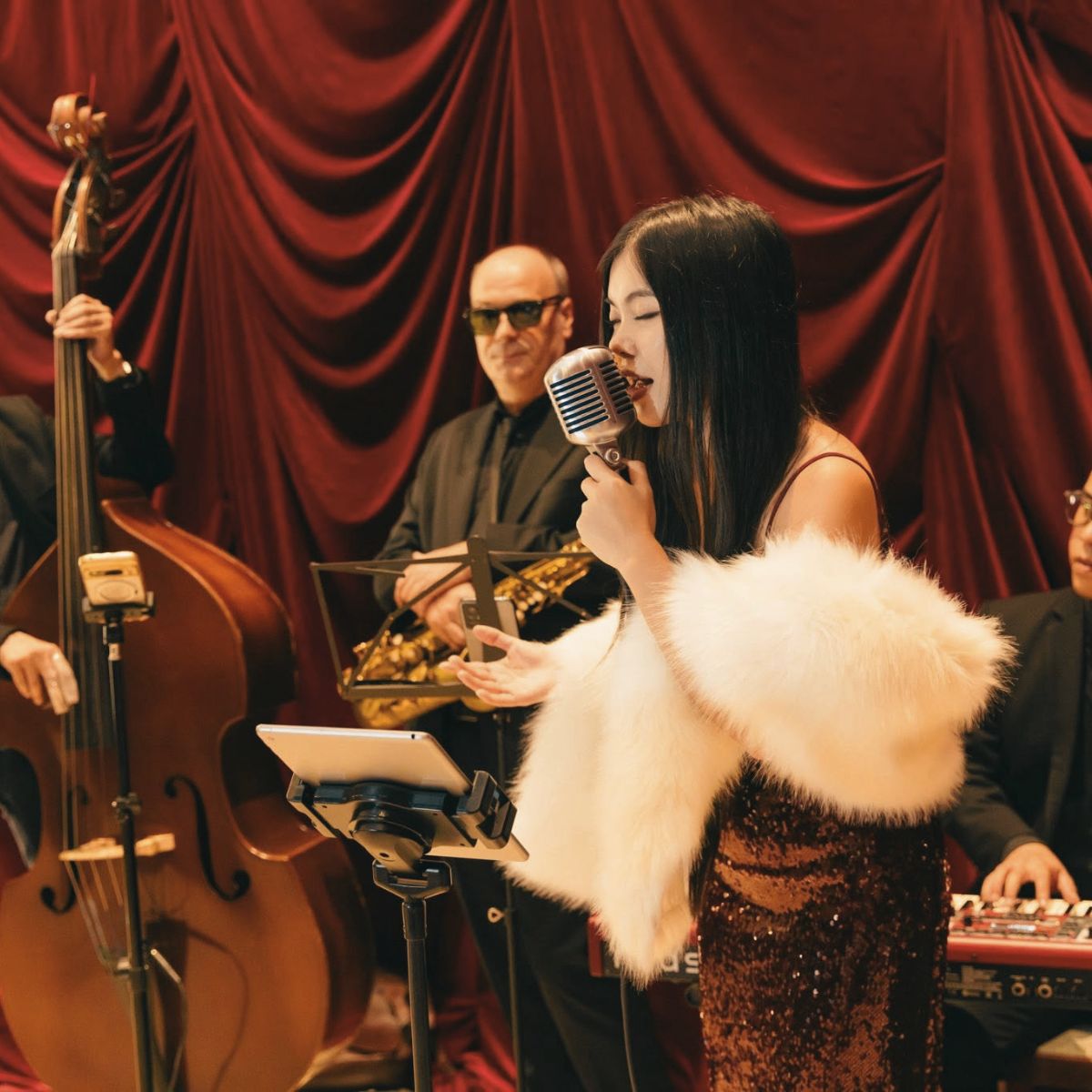
A convincing disco arrangement is not created by adding a four-on-the-floor drum pattern to any song. Bass and drums must lock together, guitar or keyboard needs to provide rhythmic subdivision, and the vocalist must sit on top of the groove without over-singing it.
In a wedding band, this can require simplifying some studio layers. The essential goal is propulsion. When the rhythm section is precise, fewer instruments can still make the room feel full.
That precision also gives the sound engineer more control in a ballroom, where excessive low-frequency energy can quickly become tiring.
Pairing disco with the after-party
Disco is particularly useful between dinner and a more contemporary after-party. It can move guests from listening to participating before the programme becomes more intense.
A band may use a run of recognisable choruses, medleys or continuous transitions so there are fewer pauses between songs. The DJ can then continue from a room that is already moving, rather than restarting the energy after the live set ends.
The band-to-DJ handover should be designed as one arc. The best transition feels like the same celebration changing texture, not one supplier finishing and another beginning.
A useful next step is understanding Ghibli Instrumental Music for a Wedding in Vietnam.
Real requests are evidence of preference, not a universal formula
Lux Band has received real client requests for disco repertoire. That evidence supports the relevance of the style, but it does not mean every couple or venue should use the same set.
The useful principle is to identify what the client means by “disco.” Some imagine classic 1970s repertoire; others are responding to modern disco-pop, funk influence or simply a bright, danceable live-band sound. The brief should be translated into musical attributes instead of treated as a label.
No unverified couple, venue or song details are attached to those requests; the useful evidence is the preference itself and the musical decisions it requires.
How to keep disco polished rather than kitsch
Avoid overloading the visual and musical presentation with stereotypes unless the wedding intentionally embraces a retro concept. The music can provide the energy without turning the event into a costume theme.
Curate a small number of unmistakable tracks, arrange the transitions tightly and keep the performance visually aligned with the wider wedding aesthetic. Strong musicianship does more for sophistication than novelty props or exaggerated genre cues.
The result can be joyful, glamorous and highly danceable while still feeling consistent with a five-star setting.
This also connects closely with How a Song Is Prepared Before It's Performed at Your Wedding.
Questions couples often ask
Is disco only suitable for the after-party?
No, but it is strongest when the wedding is ready for active participation. Softer disco-influenced repertoire can appear earlier.
Can disco work with a six-piece band?
Yes, depending on instrumentation and arrangement. Rhythm-section precision matters more than simply adding more performers.
Should the band play full songs or medleys?
Both can work. Medleys are useful when the goal is continuous dance-floor momentum, while full songs suit important favourites.
Can disco transition into a DJ set?
Yes. Planning the final live tempo, key feel and handover timing can make the transition much smoother.
Will disco feel dated?
Not necessarily. Contemporary music continues to use disco and funk vocabulary, and tasteful arrangement can keep classic material fresh.
Written and reviewed by Lux Band Editorial Team
·
“Disco works best when it feels less like a theme and more like the moment the room collectively decides to celebrate.”
Build the moment when dinner becomes celebration
Share the songs and energy references you love. Lux Band can shape a live disco passage that connects naturally with the rest of the reception and after-party.
Start a conversation →