An acoustic wedding sound is not created by simply removing electric instruments. It is built through space: how guitar, keyboard, percussion, vocals and a featured instrument divide the musical roles so the arrangement feels warm, detailed and close to the guests. The craft is less about volume and more about what each musician chooses to leave available for everyone else.
Acoustic is a texture, not a size
A duo can sound acoustic, but so can a six-piece ensemble. The defining quality is not the number of musicians; it is the way the arrangement uses organic or lightly amplified textures, controlled dynamics and clear separation between parts.
For weddings, that texture is valuable during guest arrival, ceremony, cocktail and dinner because it can remain emotionally present while conversation continues. It can also grow in energy without losing its warmth.
For the wider planning context, explore Acoustic Band or Modern Live Band for Your Wedding?.
Acoustic guitar creates movement and intimacy
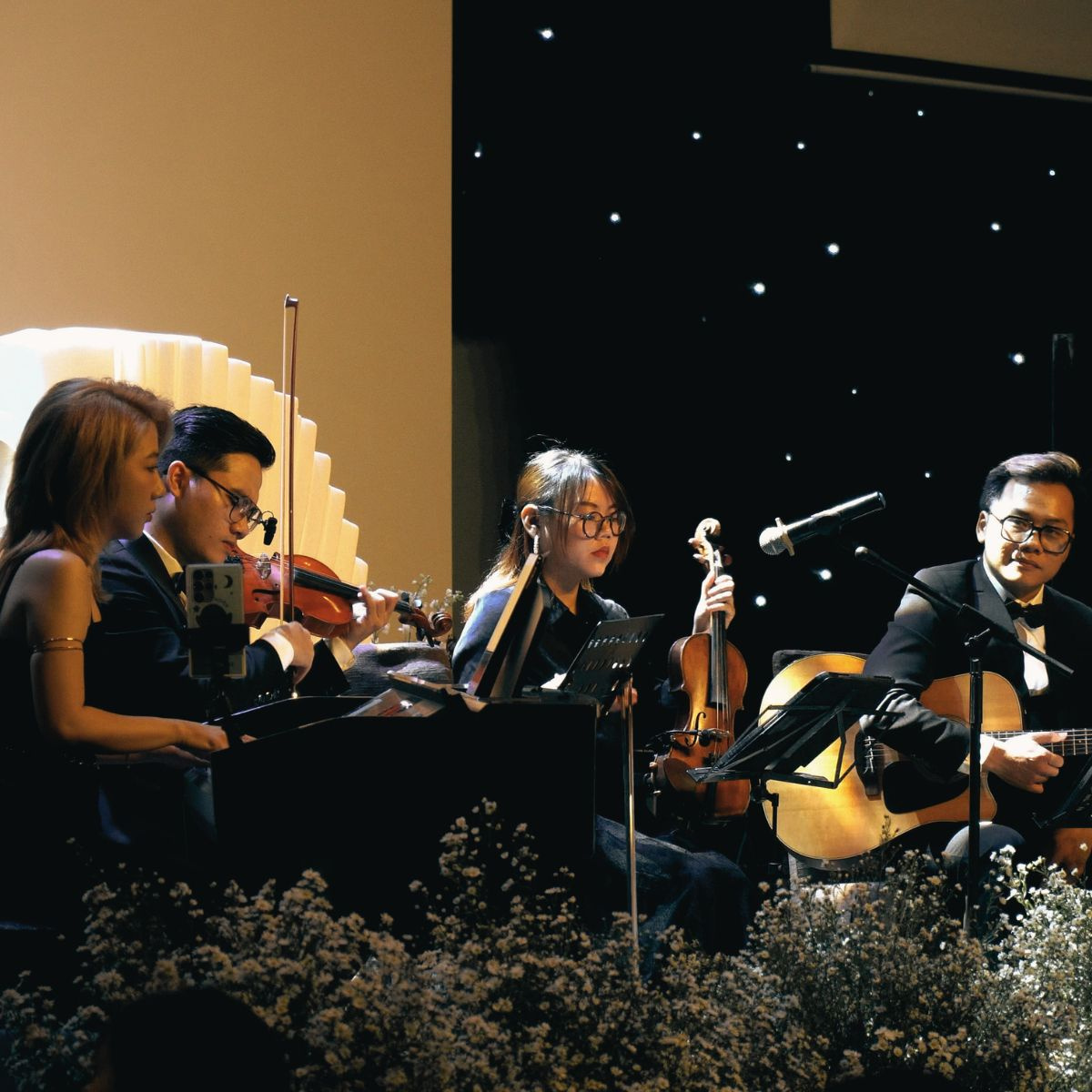
The acoustic guitar can provide pulse, harmony and percussive detail at the same time. In a good arrangement, it does not strum the same rhythm from the first bar to the last. The player can move between open voicings, fingerstyle textures, rhythmic patterns and small melodic responses to the vocal.
Because the guitar occupies a broad midrange, restraint is important when keyboard or strings are present. Leaving harmonic space makes the ensemble sound clearer and more expensive.
Keyboard adds depth without filling every gap
Keyboard can replace several studio layers, but doing so is not always desirable. In an acoustic context, its strongest role may be to support harmony, provide piano detail or create a soft pad that connects the ensemble.
The craft is in choosing when not to sustain. If keyboard, guitar and strings all occupy the same harmonic space continuously, the arrangement loses transparency. A few carefully voiced notes can make the music feel larger than a dense block of chords.
Percussion and drums control the emotional distance
Rhythm determines whether acoustic music feels like background ambience or a live performance moving toward celebration. Brushes, light electronic drums, cajón-style textures or controlled kit playing can add pulse without making the room feel suddenly louder.
As the evening develops, the drummer can increase subdivision and accent without changing the instrumentation. This is one reason an acoustic lineup can cover more of a wedding than couples sometimes expect: energy can grow through playing style, not only through adding instruments.
A useful next step is understanding Designing a String Ensemble for a Wedding Ceremony in Vietnam.
Violin or saxophone becomes a featured voice
A featured violin or saxophone can extend the emotional range of the acoustic ensemble. The instrument may carry an introduction, answer the vocalist, take a short solo or lead an instrumental version of a meaningful song.
The arrangement should resist the temptation to feature it constantly. A signature voice becomes more effective when it enters selectively. Contrast creates value: guests notice the colour because it was not present in every bar.
Arrangement is the invisible luxury
The most sophisticated acoustic sets often sound simple. That simplicity is produced by decisions: keys chosen for vocal comfort, endings agreed in advance, medleys shaped for continuity, dynamics planned around the room and instrumental roles kept distinct.
When the arrangement is working, guests hear warmth and ease. They do not hear the editing that made those qualities possible.
This also connects closely with How a Song Is Prepared Before It's Performed at Your Wedding.
Questions couples often ask
How many musicians can an acoustic wedding band include?
There is no single number. The lineup should follow the venue, programme and musical roles required.
Does acoustic mean there are no drums?
No. Controlled percussion, electronic drums or a lightly played kit can be part of an acoustic-oriented arrangement.
Can an acoustic band become energetic later?
Yes. Rhythm, tempo, vocal interaction and arrangement density can increase without abandoning the acoustic identity.
Is violin or saxophone necessary?
No. A featured instrument is optional and should be chosen for the desired colour and repertoire.
Does acoustic music work in a ballroom?
It can, provided amplification and sound zoning are designed so the detail remains clear across the room.
Written and reviewed by Lux Band Editorial Team
·
“Acoustic elegance comes from the space between instruments as much as from the instruments themselves.”
Design the acoustic texture, not just the lineup
Share your venue and the moments you want to feel intimate, warm or gently energetic. Lux Band can shape the instrumental roles around that atmosphere.
Start a conversation →